Categories
Highlights IN THE NEWS Youth Intervention Projects

Technology and (Dis)Empowerment: A Call to Technologists


Dear Friends of Gram Vaani,

Hope you have been well. 

I had started working on a book during the pandemic, largely based on Gram Vaani’s experiences with the use of technology to secure rights and entitlements for the poor, and for them to discuss and deliberate policies and social issues with one another. I am excited to share the news that the book is now published. 

It’s called Technology and (Dis)Empowerment: A Call to Technologists. My primary argument is that the goal of technology should be to overturn unjust societal structures to empower the weak and oppressed, and that technologists should take steps to ensure that their labour gets channeled singularly towards this goal.

The book is available on Amazon.in, Amazon.com, Emerald, eBooks.com, with previews at Google Books, and you can also write to me for my local electronic version. The preface, introduction, and foreword (by Professor Tim Unwin) are available here. Some comments by eminent researchers and practitioners are mentioned towards the end of this email. 

Needless to say, none of this would have been possible all the support from our partners. Gram Vaani has been incredibly lucky to have had an opportunity to work with amazing people and organizations in the social development space, to which many of us at Gram Vaani and especially me came as an outsider more than ten years back. We were warmly welcomed by the community and who worked alongside us to innovate and learn and unlearn, and the book has really emerged as an outcome from all this rich interaction. 

Much of Gram Vaani’s work so far has been in the space of participatory media, for communities to share and learn from one another, use the power of media to improve local governance and social accountability, and empower marginalized groups. Based on this experience, I will try to summarize a few of the key points I have tried to make in the book – and we are eager to continue our collaborations with all our partners to apply these principles to new areas for the use of technology, in particular for gender equality, climate resilience, and public health. 

First, I try to distinguish between the ends and means that a technology project may aim to meet. Most ICTs for development projects are unique in having identified some clear end goals for the projects, and which I found in Gram Vaani’s case helped provide us with a compass – a guiding light – to aim towards and to continuously steer our decision making to meet these goals. However, many technology projects adopt generic ethics statements that focus only on the means – do no harm guardrails that the projects should follow – and this I argue is not sufficient, like a ship without a compass to point it in the right direction. It could take the ship to many different destinations, not all of which may be desirable. A social good project must clearly define its end goals

Second, what should these end goals be for a social good project? I argue that technology should be meant to bring power-based equality in the world, by removing unjust hegemonic structures that perpetuate structural injustice. If this is not the goal, then technology often tends to reproduce inequalities – being wielded more easily by those who can gain access to it, or design it for their own agendas. I draw on works by researchers like Tim Unwin who argue for the same reason that technology should be designed only for the poor, feminist scholars like Iris Marion Young who define the purpose of justice itself as showing the path to remove the underlying processes that cause structural injustice, Amartya Sen who makes similar arguments in terms of freedoms, and Marxists like Harry Braverman or technology historians like David Noble who document the processes through which technology often serves the agendas of the powerful

Third, I delve deeper into the need to go beyond ensuring safety and equity, or goals like power-based equality, in the technology design alone. I argue that attention should be paid to ensuring the same ethical principles in the management of the technology too. I define management as what comes post-design when technology is deployed, and I argue that it is important to make this distinction between design and management because often in practice the teams of technologists playing these roles are distinct and the methods employed by them are also distinct. Most complexities at the management stage arise at the socio-technical interface when technologies begin to be used by people, and invariably lead to surprises and unforeseen situations largely due to the complexity of the world that cannot be possibly modeled completely at the design stage itself. Feedback processes to learn about these gaps, humility to acknowledge them, and proactiveness to correct them by evolving better policies or re-designing the technology systems, become essential. 

Fourth, I borrow from the concepts of appropriate technology by E.F. Schumacher and the Scandinavian methods of participatory design to emphasize that the users of a technology system should be involved in its design and management. Only once the users understand the technology and are able to un-blackbox it, can they steer the technology from avoiding harms and to neatly handle exceptions in their diverse local contexts. This has always been a key principle for us at Gram Vaani, and led us to develop the hybrid online-offline Mobile Vaani model – where the online technology is governed by an offline team of community volunteers. It is the volunteers who are able to ensure a close embedding of Mobile Vaani within the communities, convey editorial preferences for the content carried on their platform, and ensure that all operations adhere to the ethical principles of inclusion and empowerment of the weak and oppressed. We have always endeavoured to get to a point where the technology simply becomes an infrastructure, and community institutions such as the Mobile Vaani volunteer clubs do the rest. 

Fifth, I discuss what might prevent technologists from following these principles above. I delve in detail into the current structures of the market and state that often compromise these values, either by design or by sidelining these principles in favour of other objectives. Profit-seeking goals of corporations, or social control goals of the state, and often interlocks between the two, infiltrate multiple spheres that lead to fallouts from technology. They infiltrate organizational culture by creating role-based segregation and moral buffers for various teams. They influence the incentive structures for technologists by emphasizing profit-maximizing metrics rather than impact-maximizing or harm-avoiding metrics. And in the current context of increasing digitization led by centralized architectures they inevitably lead to surveillance based models which at worst are designed to disempower individual and group freedom, or at best are highly error prone and often not scaffolded by fault-managing systems like for grievance redressal. 

This is why the book is really a call to technologists to realize their position of strength in today’s world and take steps to ensure that their labour is indeed able to lead to empowering effects for the weak. This is not just a hope. I rely here on Marx’s concept of humanism. For Marx, social relationships arise from relations of production and consumption, and positive social relationships are those that create genuine use-value, without coercion or instrumental use of others. Technologists are workers too, and I believe we are driven by these same desires of reclaiming our humanism. I strongly believe that sooner or later technologists will indeed see through the fog that often surrounds them and blunts their passion of taking deliberate action to bring about social good and only that through their labour. Collectives of technologists that can change their organizations from within, public spheres that connect technologists with end-users of their technologies, and new economic structures such as the commons, may hold the key to the way forward. 

Finally, I argue that such a value-driven ethos for technologists can exist only within the morally grounded rules of behavior that democracy tries to create for society. Pluralism to listen to diverse voices, learn from them, and change one’s preferences based on these insights, is what drives democracy. For their own humanism, technologists have a role here too to build meta-social good infrastructures that strengthen democracy through pluralism and structures of accountability and transparency. I argue that participatory media systems such as those created by Gram Vaani, and the community media ecosystem in general, are crucial for this purpose. These systems enable deliberation and learning, and see the media as a tool in the hands of activists and communities to increase freedoms and democracy, and not as a mechanism for propaganda wielded by the powerful. 

I look forward to hearing your thoughts. 

And we at Gram Vaani are eager to continue working with all our partners in the space of social entitlements and rights for rural communities and industrial sector workers, and explore new directions in improving gender equality by creating women-driven community media platforms, improve natural resource management by making it easier for communities to demand relevant water conservation structures and adopt alternate land-use practices, and design more appropriate community and health-worker facing applications for public health systems that can put the power of data in the hands of the users. 

We are eager to build a movement to ensure that technology becomes an unambiguous force of social good and transforms the world rapidly into a more equitable and fair ecosystem, capable of handling the grave impending challenges of inequality, exploitation, poverty, and climate change that we face today. 


sincerely

Aadi

———————————————————————–

Given the enormous influence and control of technologies over our lives, an ethical enquiry into their development, use and ownership is of vital importance. This book provides an incisive account of how state and market-led technologies have exacerbated socio-economic and environmental injustice, and conversely, how technologies based on the ethics of plurality, diversity, power-based equality, freedom and participation can help the movement towards justice and sustainability. Seth’s call is not for rejecting technology, but for paradigm shifts towards more socially engaged technology and technologists.

— Ashish Kothari: Kalpavriksh, Vikalp Sangam and Global Tapestry of Alternatives


If you want to use information technology to make a positive difference in the world, then you need to read this book. Aadi Seth combines careful analysis of the interplay between technology design and socio-political processes with a wealth of practical experience to identify key challenges that efforts around IT for Good will always have to face.

— Andy Dearden: Professor (Emeritus) Interactive Systems Design, Sheffield Hallam University


Professor Aaditeshwar Seth has spent years developing technologies through Gram Vaani, a social enterprise delivering a voice-based social media platform in northern India. Based on wide-ranging scholarship and hard-won experience, he counters market values with an approach to social impact that takes ethics and socio-technical theories seriously. If you’re a technologist hoping to contribute to social good, this book will keep you honest!

— Kentaro Toyama: Professor, School of Information, University of Michigan


What comes out most importantly in the text is Aadi’s two-fold firm conviction – one, that a technological community committed towards social good is indeed possible; and two, that dividing lines across technologists and ordinary people can be bridged, and this is what he has argued for. I hope that the technological community engages with these arguments.

— Rahul Varman: Professor, Department of Industrial & Management Engineering, Indian Institute of Technology Kanpur

Categories
Uncategorized

Михаил Зборовский: будущее Cosmobet и всей индустрии к 2030 году

Онлайн-казино как явление стремительно меняется под влиянием технологий, регулирования и запросов игроков. Михаил Зборовский, бенефициар Cosmobet, считает, что в ближайшие годы онлайн-жизнь будет только расти и развиваться.

Чего конкретно стоит ожидать от индустрии?

Изменения сегодня – меняют будущее завтрашнего дня. Давайте разберемся.

  • Полноценное внедрение криптомонет: Существует множество альтернатив фиатным деньгам. Однако многие это игнорируют. В мире онлайн-досуга должны быть и виртуальные деньги.
  • Развитие виртуальной реальности: К 2030 году цифровые казино станут реальностью, позволяя игрокам перемещаться по цифровым игорным залам и взаимодействовать с другими пользователями.

Сравнение гемблинга сегодня и в 2030 году

Технический прогресс удивляет нас каждый день, то, что было невозможным несколько лет назад, уже стало реальностью. Индустрия азартных развлечений не должна стоять в стороне от прогресса. Только систематические инвестиции и привлечение новых умов приведут нас к чему-то новому.

Фактор 2025 год 2030 год
Безопасность Защита данных, 2FA Полный контроль через AI, биометрическая аутентификация
Платежи Карты, электронные кошельки Криптовалюты, мгновенные блокчейн-транзакции
Игровой опыт Онлайн-казино с живыми дилерами Полноценные VR/AR-игровые залы

Пытаясь предсказать что-то, мы создаём это уже сегодня. Не стоит полагаться, что кто-то сделает работу за нас. Множество операторов будут ориентироваться на прорывные решения и адаптироваться под них. Соответственно, только “первопроходцы” новых технологий смогут устоять в ужесточённой конкуренции.

Categories
Agriculture and Alternative Livelihood Highlights Youth Intervention Projects

Voice Technology Innovations by Gram Vaani


Voice-based conversational interfaces hold significant potential to build interactive applications, especially for data collection in low-resource settings for low-income & less-literate populations, where users may speak their responses in conversational manner through natural speech.

 This video showcases our three new voice-tech innovations  – 1) Voice-enabled Data Collection 2) Voice-enabled Conversational Message d]Delivery or a ‘VoiceBot’ & 3) Automated Voice QnA. All three solutions are accessed through our robust & scale-tested Interactive Voice Response (IVR) platform available over basic feature-phones without the need for internet and smart devices.

Costs and Benefits of Conducting Voice-based Surveys Versus Keypress-based Surveys on Interactive Voice Response Systems – A. Khullar, P. Hitesh, S. Rahman, D. Kumar, R. Pandey, P. Kumar, R. Tripathi, Prince, A.A. Jha, Himanshu, and A. Seth.
ACM COMPASS, 2021.

Experiences with the Introduction of AI-based Tools for Moderation Automation of Voice-based Participatory Media Forums – A. Khullar, P. Panjal, R. Pandey, A. Burnwal, P. Raj, A.A. Jha, P. Hitesh, R.J. Reddy, Himanshu, and A. Seth.
India HCI, 2021.

Early Results from Automating Voice-based Question-Answering Services Among Low-income Populations in India – A. Khullar, M. Santosh, P. Kumar, S. Rahman, R. Tripathi, D. Kumar, S. Saini, R. Pandey, and A. Seth.
ACM COMPASS, 2021.

Initial Lessons from Building an IVR-based Automated Question-Answering System – P. Bhagat, S. Prajapati, and A. Seth.
ICTD, 2020.

Categories
Uncategorized

Михаил Зборовский: грядущие изменения в индустрии развлечений

Современные технологии стремительно меняют сферу развлечений, делая ее более интерактивной, персонализированной и безопасной. Михаил Зборовский считает, в ближайшие годы нас ждут глобальные изменения в индустрии развлечений, и ключевую роль в этом сыграют искусственный интеллект.

Технологии, что определят будущее индустрии развлечений

Гемблинг – одна из самых быстрорастущих отраслей, в ближайшие 5-10 лет нас ждут следующие изменения:

  • Рост мобильного гемблинга. Более 70% ставок уже совершаются через смартфоны, и эта доля продолжит расти.
  • Интеграция AI в онлайн-казино. Системы будут автоматически анализировать поведение игроков и предотвращать мошенничество.
  • Создание метавселенных для гемблинга. Пользователи смогут взаимодействовать в виртуальной среде, участвовать в турнирах и соревнованиях.
  • Развитие ответственного гемблинга. Технологии помогут предупреждать игровую зависимость и защищать пользователей.

Будущее – уже наступило

Индустрия развлечений – это слияние технологий и максимальная персонализация. Визионер Михаил Зборовский утверждает: 

– “Уже в ближайшие годы нас ждет более безопасный, инновационный и захватывающий формат развлечений, который изменит привычный мир гемблинга, видеоигр и онлайн-казино.”

Categories
Agriculture and Alternative Livelihood

What can make Direct Benefit Transfers safer for India’s rural citizens?


By Rohan Katepallewar and Vani Viswanathan, Gram Vaani

For five years, Arun Lodhiya from Shivpuri, Madhya Pradesh, tried multiple times to withdraw his NREGA wages from his bank account at the local Customer Service Point, which are set up across the country to facilitate last-mile banking services for people in villages. From 2015 to 2020, he only managed to withdraw INR 5,800, his attempts regularly failing despite his thumbprint authentication, as the operator at the CSP said there was insufficient balance in his account or that his account was “blocked”. He was in for a shock when in 2020, he realized that each time he was attempting to withdraw money, the “issues” that had prevented him from withdrawing cash were used as a cover-up to rob him of INR 1 lakh.

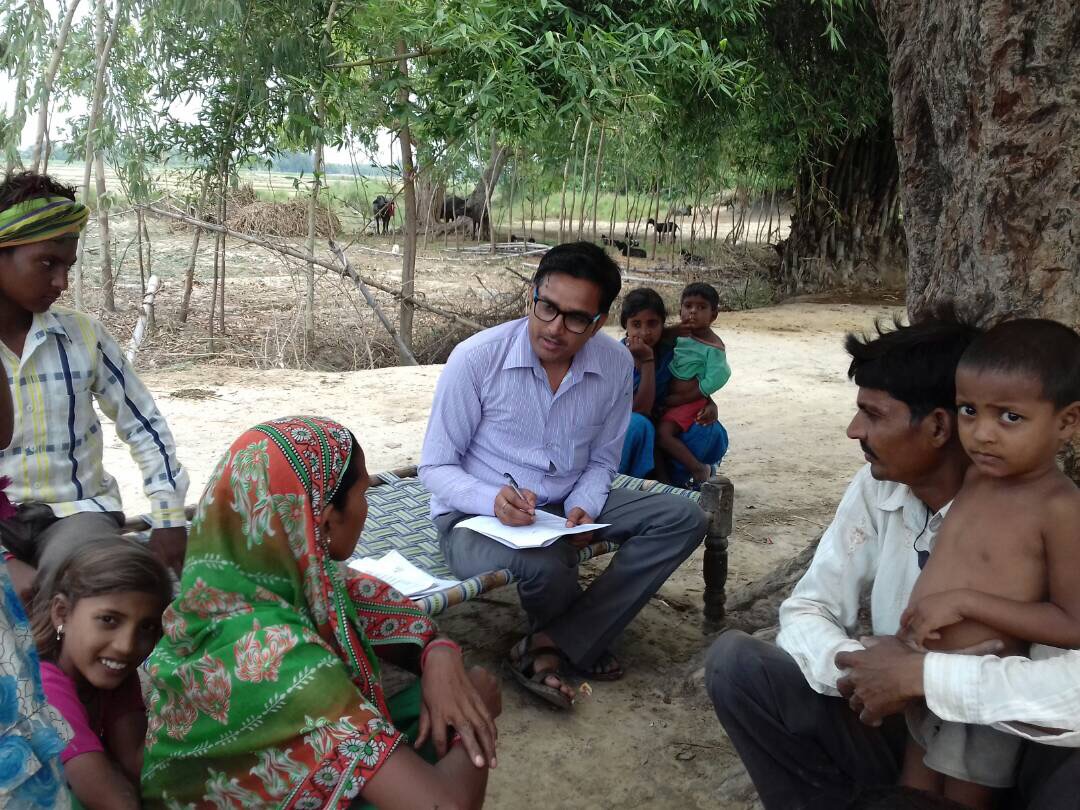
Arun is one of hundreds of people who shared their experiences of using India’s physical and digital banking services with Mobile Vaani, our mobile radio platform for people in hard-to-reach communities.

Financial inclusion has been well established as the pathway to alleviate poverty and promote economic development. Acknowledging this fact, the Indian government has been striving for financial inclusion of the masses, while also working to strengthen the physical and digital banking ecosystem. The Jan Dhan Yojana attempts to ensure every adult has a bank account, and Direct Benefit Transfers (DBTs) have become the norm, with over 400 government schemes using DBT to transfer cash to needy beneficiaries. DBT is being hailed as a vehicle for economic development and digital financial services are being thrust upon people as the means for accessing social welfare in India.

However, the limitations in the existing banking system and the near-absence of initiatives to promote digital financial literacy and safety are creating adverse impact on the ground. These issues put people through unprecedented hardship during the COVID pandemic.

Barriers to access cash and services

India may have among the highest number of bank branches in the world, but the proportion of rural branches has been dismal as compared to urban branches and this number has constantly been reducing in the post 1991 era. In a Mobile Vaani survey 1 in 5 respondents said they do not have banks in their vicinity, and similar to the findings shared in this LibTech study, we often hear on Mobile Vaani that people travel several kilometres to access their NREGA wages and other government entitlements.

Indian policymakers envisaged tech solutions to tackle some of these issues, rolling out digital financial services such as online banking to expediate basic transactions. Yet, these solutions didn’t take into account contextual barriers which affect the banking system in rural regions. For instance, researchers have been pointing out the issues associated the Aadhaar Enabled Payment System (AePS), which allows people to conduct financial transactions using their Aadhaar number and verifying it with their biometrics. Yet, ignoring these limitations, the system was taken to the scale. Consequently, it failed to offer a seamless experience to users in hard-to-reach areas due to multiple factors including intermittent electricity supply and poor internet connectivity. The average failure rate of AePS transactions in April 2020 was 39%, estimated at 257 million failed transactions in a single month. No wonder, villagers who take the trouble to visit far-off bank branches to access cash return with empty hands.

Tools for decentralized banking such as the CSP and Business Correspondents (BC) to bring the services closer to the community have been unable to build users’ trust – and for good reason. Neeraj Prajapati, also from the Shivpuri district of Madhya Pradesh, shared on Mobile Vaani that when his mother tried withdrawing her wages using the AePS system, she was informed by the CSP that the internet was down. Yet, when she tried collecting cash directly from the bank, she learnt that her amount had already been withdrawn during the first attempt. Similarly, a Mobile Vaani volunteer shares that a kiosk center operator in Khaniyadana block, Shivpuri, was charging INR 250 for allowing community members to withdraw their entitlements from the accounts. Similar stories of bank account frauds have been documented on multiple forums from across India.

Poor digital and financial literacy adds to woes

Rural communities often lack contextual and local sources of information that could help them understand the changing frameworks of digital financial services. Conventional mass media campaigns and ad hoc financial education programs often fail to make people ‘financially capable’. Also, experts point out that Indians in general are not sensitive to their privacy, so they are very prone to OTP-related risks and cybercrimes as well. We heard on Mobile Vaani the story of  Sanvi Kumari, an SHG member in Madhya Pradesh, who received a call from a person pretending to do her bank KYC. She was asked for debit card number, PIN and OTP, which she shared, unaware of the risks. As a result, she lost over INR 50,000. Similarly, lack of consciousness about one’s digital identity and its associated risks is also leading to various kinds of cyber fraud. For instance, a recent Mobile Vaani story describes the hacking of the Facebook account of Suresh Kumar Shukla from Vaishali district, Bihar, following which many of his friends were requested to deposit some money in a particular account number to “help” him with COVID-19 treatment. Suresh’s friend Jaychandra Kumar Yadav couldn’t identify this fake request and deposited INR 10,000 in the account number provided.

Near-absence of effective grievance redressal mechanism

Grievance redressal is the weakest link in India’s financial inclusion journey. This is true for traditional banking as well as for new innovations like UPI or payment wallets. While the new digital financial services are being aggressively promoted in remote areas, there are no accessible grievances redressal mechanisms – by the government or private entities. While grievance redressal has always suffered, it is increasingly going online, leaving millions with little hope of receiving positive outcomes of their complaints. The LibTech India study cited earlier, for instance, found that when NREGA workers had to file complaints, 94 percent of those who had a grievance who communicated their complaints did so verbally. Gram Vaani’s experiences with users have shown that centralised grievance redressal helplines suffered from not having personal follow-up possible, and we have found that civil-society mediation and assistance is important to help people in the hinterlands reach and get positive outcomes from a centralised grievance redressal system. The importance of this only grows when the grievance redressal mechanism is online.

A sound rural banking system holds the key for social security and economic recovery

In the post-COVID19 world, rising outlays under DBT-led benefits are making banking services more crucial in rural regions. Given the issues discussed above, we recommend the following key changes to strengthen people’s access to state welfare to which they are entitled.

  1. Increase accountability of relevant government department by making information on transaction failures public: It should be mandatory for line departments which use DBT to make dummy transactions for sanctioned beneficiaries of a DBT scheme and if the transaction fails, to identify and publicly share the cause of failure. They should also publicly share information on payment failures on account of biometric authentication failure or network failure, including name of the concerned beneficiary, the date of failure, cause of failure, level at which failure took place. All of these can help civil society and affected individuals to take steps to address the issues.
  2. Put power in the consumers’ hands: Enabling audio in Point of Sale machines such as ATMs, kiosks and micro-ATMs could help people clearly hear what transactions are happening and which ones are failing, so they can initiate grievance redressal. This will help reduce fraud and denials due to technology failure. Similarly, enabling SMS/IVR notifications for any bank transaction for all by default at no cost will help consumers be aware of any unauthorized cash withdrawals from their accounts.
  3. Strengthen grievance redressal: Offer multiple channels for beneficiaries to file grievances with receiving payments, such as through the helpline, website, bank branch, etc. In a country with a large digital divide, and poor digital literacy, it is essential to allow citizens diverse ways to register issues accessing welfare schemes.
  4. Conduct mass awareness campaigns on financial literacy: Banks and governments should conduct campaigns on how cash transfers work and on ways people can safeguard themselves against financial fraud.

COVID-19 may have given rural India a stronger reason to go for digital banking, but its spread must be mindfully planned. After all, technology is not a panacea; technology must be rooted in local contexts and reflective of local needs to address issues – otherwise it only exacerbates inequality.

Categories
Agriculture and Alternative Livelihood Other Youth Intervention Projects

What’s next in ICT4D


As we step into 2019 in earnest, it is time for some reflection: What were some interesting developments in the field of technology, especially ICTs, for development in 2018? What are the most unique and growing applications of technology that will define the years to come? And finally, what are some key learnings of ICTs for Development that we should keep in mind as we go along?


Noteworthy developments from the recent past

  1. Vernacular tech is growing, but more is needed to make the content localised, relevant and optimised for minimum usage of data or space without compromising on quality. Ankur Capital writes on this key trend: https://www.ankurcapital.com/post/vernacular-tech-changing-business-landscape-in-india-for-next-billion-users
  2. Even as data usage grows, offline sharing of apps, content and files is a trend that is popular among semi-urban and rural areas of India that are still in the shadows of reliable mobile data connectivity. Arundhati Ramanathan writes for The Ken on how Google is trying to tap into P2P sharing of apps, currently dominated by SHAREit (the piece requires sign-up to read): https://the-ken.com/story/google-wants-its-share-of-shareits-sideloading-pie/
  3. An interesting new development is that of vernacular ‘conversational agents’ to address the needs of people with low literacy and technology experience for credible information and counsel on various topics. Read about Farm Chat, a conversational agent in Hindi for farmers: https://homes.cs.washington.edu/~mohitj/pdfs/j2-imwut-2018.pdf
Upcoming applications of technology that hold promise
Digital technologies, including ICTs, have been successful in measuring, delivering and monitoring health services in India, but here are some new areas that are opening up.
  1. Satellite imaging, IoT and big data for improving farm yields, strengthening climate change resilience, agriculture financing, insurance, etc. Check out Oxen Farms, an IIT Kanpur incubated start-up that incorporates these technologies in farms across central and northern states of India.
  2. There is growing deployment of technology and media for ensuring rights, with their role in contributing to transparency and accountability becoming centre stage. Read our colleague Orlanda Ruthven’s article on The Wire on our platform Saajha Manch, which provides a database of accounts by workers in NCR of the kinds of violation and enforcement failure encountered daily.
  3. Children from low-income families often end up trailing behind in schools because their parents, often with limited education themselves, are unable to help the children with early education. Start-ups such as Saarthi Education and Dost Education are leveraging simple ICTs to equip parents to better engage in their children’s early education and development.
Pointers to remember as we look to use technology for good in the coming years
  1. Technology is not good or bad in and of itself, but any technology can be misused if we don’t put in place robust structures for its use and governance. Read what our co-founder Aaditeshwar Seth has to say about ensuring responsible outcomes from technology, including some possible governance structures to explore: http://www.cse.iitd.ernet.in/~aseth/processes-to-manage-technology.pdf
  2. Even as we herald the coming-of-age of mobile technologies in India, there’s a substantial gap in people’s access to and ability to tap the multiple benefits it can offer, especially among women. This paper from Harvard Kennedy School examines the intersections between economic and normative barriers that influence women’s ownership of mobile phones – and therefore will influence how we develop programmes to engage and benefit women.
  3. Does access to technology mean its benefits can be realised? Our experience showed that there’s more to it – technology adoption doesn’t happen instantaneously. Skill building through offline methods is crucial here, and these need to be low-cost methods. Read about how we can build stable, self-governing and reproducible structures in offline skilling – based on our experience with Mobile Vaani’s strategy of creating volunteer clubs: http://www.cse.iitd.ernet.in/~aseth/camera-ready-1598-4953-1-PB.pdf
  4. With our project JEEViKA Mobile Vaani, we managed to bring in women who didn’t have access to, or regularly use, mobile phones and shared messages on improving maternal nutrition. Here is a paper that was presented at Information and Communication
    Technologies and Development (ICTD) 2019 on our experiences in building technology adoption among women through this project: http://www.cse.iitd.ernet.in/~aseth/genderNtechICTD19-1909-01.pdf
Categories
Other

Campaign against early marriage

Breakthrough and Gram Vaani worked together in Jharkhand to discuss the community’s feelings towards early marriage — why it still happens, what are its affects on girls, what are its affects on boys, secondary education, and other aspects. The campaign demonstrates the willingness of the community to discuss even hard topics such as these.

This campaign was also unique because it involved a lot of offline activity where pledges were taken from Panchayat members, school teachers, police officials, and others, to sensitize them to the topic of early marriage.

A detailed report can be downloaded here.

Categories
Youth Intervention Highlights

IVR systems for visually impaired people

Categories
Other Youth Intervention Highlights

Gram Vaani’s Grand Challenge


Canada just gave Gram Vaani a Grand Challenge: We won the Grand Challenges Canada award to use the Goonj community mobile media platform to improve accountability in the delivery of health services. See the announcement on the link below, and check this space for updates on how we do this.

http://www.grandchallenges.ca/grantee-stars/0160-01/