Categories
GROUND REPORTS

Mar ’20: A week into the lockdown


The ground reality is starting to look very different because of the lockdown. Health issues seem to be least on the minds of people. Listen to these voices from across the country coming on our various community media platforms to understand what’s happening, from an unfiltered and untouched perspective, and the assistance being provided by our teams and volunteers. We hope the situation stabilizes soon and public attention comes back to health, and to seek advice, follow advisories, and be compassionate to one another. Each of these links is to an audio file. 

In rural areas of Bihar, Jharkhand, UP, and MP, while there is a lot of action by local authorities to distribute food, and many social workers and local NGOs have come to the rescue as well, but there is a lack of coordination that can be facilitated by the government such as to demarcate areas or direct people to go to the right places for help. Mobile Vaani volunteers have stepped up to raise these issues to the government and are helping connect people facing food shortages with social workers and Gram Panchayat authorities. Even temple pujaris are out of food and citizen groups have had to act against black marketing and rising prices which have gone up manifold. Our volunteers have also continued the hard work to hold PDS shopkeepers to account

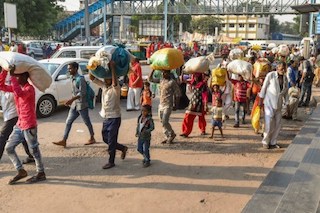
Several MLAs have offered their houses to serve as isolation wards while schools and panchayat bhawans are also being provisioned to serve as quanrantine units for returning migrants, but food and cleanliness problems persist. These people have walked back hungry because shops along the way are closed, hitched rides on trucks, or whatever means they could find to come back to the safety of their families, but the localites are stressed that those not following quarantine rules will cause the infection to spread and are acting as vigilantes. Clearly all this can spiral easily into communal social unrest and the government should issue more emphatic communication urgently via the Gram Panchayats. Unfortunately however there are also reports of irrational violent police action which doesn’t help alleviate tensions of people.

Reports say that markets are still on in many places and leading to large crowds but thankfully many shops even in rural areas have started social distancing practices by drawing circles on the ground for people to stand. It is a tough situation though. Shortages of gas cylinders is leading to large lines and pushing and shoving. All this calls for greater coordination by distribution agencies, as also seen at bank branches where large crowds assembled to withdraw cash and waited for several hours, but the bank later said that they didn’t have cash to disburse. This could have been conveyed earlier by them.

A similar lack of appropriate communication and coordination is much needed for health facilities. OPDs are closed in most public health centers and cases are coming up of a husband running around with a bleeding pregnant wife or people with injuries not getting medical attention. Physically disabled people are also facing similar issues in their day to day life. Community health workers are working hard to spread awareness but they are out of personal protection wear and in fact are facing stigma by their own village people for having higher chances of infection. Appeals have also been issued by PDS shopkeepers to be provided with masks and gloves, they are even ready to purchase them out of personal funds but nothing is available in the market.

In such an environment, people are anxious about their health and even approach doctors whom they trust, but based on user feedback we have decided to suspend the self-assessment IVR survey we had put up on Mobile Vaani since it was creating greater anxiety among the people. We plan to open it up after some time when things are more stable. We are continuing to run the survey on the state-wide COVID-19 IVRs that are being promoted by our partner field teams who are trained on public health, and we are watching out for more feedback. 

Work was continuing at a railway line despite the lockdown and our volunteers helped alert the authorities about it, but on the other hand farmers are upset because workers are not available for harvesting and clear guidelines are not being issued by the government. Feed availability for livestock is also becoming an issue and our volunteers helped escalate this issue for resolution in a few places. Due to a lack of work, people are facing hardship with availability of food and money. There are cries for help from the rural poor who live hand to mouth on a day to day basis. And also cries for help from their relatives stuck in far away cities in Karnataka or Jalandhar or Kerala or Mumbai or Gurgaon or Manesar or Haryana or Tirupur or Ahmedabad where the local state governments are trying to provide food but it is irregular and of poor quality, their landlords are pushing for eviction and employers or contractors are not paying wages, people are afraid to step out because of the police, and helplines are not working. The living conditions of workers in cities were terrible to begin with, and now it is only worse. A mother from Madhubani who came to Delhi for treatment of her 15 year old daughter is now stuck here. They just want to go back to their families and loved ones but the lack of consistent communication by different state governments is causing a lot of confusion and stress. They want clarity on relief measures and how they will operate, they want action from the government and not just promises. The need is urgent and people are helpless, they have no way other than to walk back home. Even those who are settled in cities have run out food and fuel for cooking. Our teams are trying to connect such people with organizations that can help, with food or cash, but the need is very large.

On the other hand, people are also facing issues with accessing the relief benefits announced by the different governments. Many farmers have not received any DBT transfers for PM-KISAN as yet, clearly due to Aadhaar linkage issues. Gas cylinders have not been delivered because of the lockdown. There is no news on the advance ration promised. 

Listen to more stories here, running upwards of 3000 now on COVID-19 related issues, and also stories of impact by our volunteers. A shorter pruned list of stories, reasonably up to date, is also maintained here. And write to us at covid-response@gramvaani.org if you are working on the ground in Bihar, Jharkhand, MP, UP, Delhi NCR, Tamil Nadu, or Karnataka in any of the areas listed in the annexure of the note here

All people are the same. All of us want dignity, stability, love, peace… yet all people are also different, coming from different contexts, different needs, different circumstances… the government and all of us need to be more communicative, more open to understanding one another, more compassionate, and only then do we stand chance as a society to live together and allow everybody to prosper. In our view, some things the state governments should do: 

  • Clarify that regular OPD functioning at the PHCs should restart
  • Set up a helpline for PDS dealers and other shopkeepers to alert on supply shortages, and take immediate action to identify transportation or other bottlenecks that might be hampering the supply of food
  • Run emphatic loud-speaker announcements via the Gram Panchayats urging people to be compassionate towards migrant workers returning home, to help ensure that their symptomatic testing is not unduly stressful, that their isolation wards are clean and food is provided to them, and that this should be a duty of the entire community and not just the state. Similarly, also communicate about the tough job that is done by the health workers, and to support them in such a difficult situation
  • Issue guidelines on how to avail relief measures announced by various governments, but also provide easy routes for people who don’t have ration cards, or don’t have pension accounts linked with Aadhaar, or active Jan Dhan accounts. A simple cash disbursement process should be developed for them, or vouchers should be given for the purchase of essential commodities
  • Ensure that community health workers are looked after, that they have adequate protective gear, and that training and treatment protocols are clearly communicated to them
  • Workers who are continuing to stay in cities because of the lockdown, despite having no work any more, should be given a regular supply of cash or food without fail
  • All service providers should be issued advisory on how to coordinate their distribution activities like by issuing tokens, and issue clear communication to the people, so that there is no unnecessary crowd buildup and stress on the people, and the police are not forced to intervene in a harsh manner to control the crowd
Categories
GROUND REPORTS

Apr ’20: Communities’ access to govt. relief measures


 Results from our community survey (1700+ respondents) are now available, about access to the lockdown related relief measures in rural Bihar, Jharkhand, and Madhya Pradesh. Some key highlights:

  • Over 60% of the respondents have not received the free ration to which they were entitled. Anganwadi linked distribution is doing marginally better. 
  • At least 1 in 2 respondents have not received the financial assistance promised to them. 
  • The majority of respondents reported positively that police and local officials were not stopping them from availing essential services. 25% however did report high-handed behavior by the police. 
  • Over 50% of the respondents reported that they can manage household expenses for just a week if the lockdown were to be extended; 1 in 4 had no idea how long they would be able to manage. 
Categories
GROUND REPORTS

Apr ’20: Lockdown lives of workers in industrial areas


Results are now available from our lockdown survey (700+ respondents) among workers in the industrial areas of Haryana, Tirupur, Ahmedabad, and Delhi. Some key highlights: 

  • Almost 53% workers report having been laid-off during the lockdown, the highest being in Haryana
  • Of the ones laid-off, 57% report not having been paid their full wages, the highest again being in Haryana, and Ahmedabad
  • Overall, more than 60% of the workers report an urgent need for assistance, mostly of food. The worst is in Tirupur where many migrants from Bihar and Orissa are stranded, without money or ration. 50% of the people are desperate to go back home, and the situation hasn’t really changed much over the last three weeks of the lockdown
  • The government has relaxed the rules for workers to withdraw funds from their PF accounts, but more than 50% of the workers do not have PF accounts, and of them 60% haven’t been paid their full wages either


Categories
GROUND REPORTS

May ’20: Surveys on migrant and resident workers


Results from our twinned surveys of 383 migrant workers and 657 resident workers, are now available. The findings present a clear picture of worker invisibility in social security schemes, that led to much hardship for both migrant and resident workers, across all sectors of work. Very few are considering coming back to the cities for work any time soon, and it remains an open question of how the surplus labour in rural areas will find sufficient work. An article based on the surveys has been published here, and the survey has also been used in Dvara’s COVID-19 Impact on Daily Life (CIDL) Survey.

Migrant workers survey done in 3 phases, during lockdown #2, #3, #4:

  • Migrant workers are engaged mostly in factory work, or as daily wage labourers in construction or agricultural work. Overall, only 20% reported being registered under any welfare boards, PF, or ESI like  social security schemes. Clearly most migrant workers are invisible. 
  • As a result of this invisibility, between 60-70% workers have reported not having received any cash transfer support from the state or central governments. With 85% reporting not having had any income at all through the lockdown, about 30% had to borrow money from others and 8% had to sell their assets for cash.
  • 62% of those in wage work did not get any help from their employers either.
  • Stranded without food or cash, around 50% have wanted or tried going back home. Even with the Shramik Special trains, 80% have either walked back, cycled, or hitched rides on trucks, under precarious conditions.
  • Of those who reached their native places safely, only about 28% have stayed in the quarantine centres, the rest have self-quarantined at home. 63% of those staying in the quarantine centres report that these centres were unclean or irregular on food timings.
  • A significant fraction report having faced some kind of discrimination, both at their place of work and upon coming back home. More than 55% of returned migrants plan to engage in agriculture related work,  and only 10% show any inclination of going back to the cities for work any time soon. With factories having resumed at diminished capacity and only employing permanent workers, work is likely to be scarce in the cities. It remains a question if at home, agriculture or MNREGA or other works can absorb this surplus labour.

Resident workers survey done in 3 phases, during lockdown #2, #3, #4:

  • Resident workers are engaged mostly as daily wage labourers in construction or agricultural work. Overall, only 15% reported being registered under any welfare boards, PF, or ESI like social security schemes. Clearly most resident workers are invisible, including many street vendors and daily wage workers. 
  • As a result of this invisibility, 66% workers reported not having received any cash transfer support from the state or central governments. With close to 85% reporting not having had any income at all throughout the lockdown, about 32% had to borrow money from others and 15% had to sell their assets to get cash. 
  • Of those in wage work, 60% did not get any help from their employers or contractors either. 
  • 66% have still not been able to resume their work, and this is true for people in all categories of work including self-employment, daily wage labour, factory work, street vendors, etc. 
  • Most of them hope to start work again in farming or agricultural labour, or MNREGA like non-agricultural work. Only 8.7% show any inclination of going to cities for work. 
  • 32% reported that MGNREGA work has still not started in their areas despite governments announcing that returned migrant labourers will be provided work promptly. Whether the rural economy will be able to absorb surplus labour because of many returned migrant workers is an important open question. Around 42% believe that agriculture related work will not be sufficient enough to absorb the surplus labour force, and 50% believe that wages will get suppressed as well. 
  • While the most significant concern on people’s mind is related to employment, they are also concerned about household level stress and tension, and the lack of space in the house, with more people at home now. 
Categories
GROUND REPORTS

Jun ’20: Lockdown chronicles and the lives of migrant workers


Read the following ground reports on the lives of migrant workers stranded without support, food, transportation or money.
  • Lockdown chronicle, as observed through Saajha Manch, our platform for industrial workers. Many of these workers are inter-state migrants and the report outlines their experiences from the time factories started closing up, and workers were left unpaid and stranded, harassed by landlords, and forgotten by governments. Compelled to travel back home, many are now uncertain of whether they want to come back, but as work resumes at a diminished capacity and confused manner, the big question still looms of whether or not this event will finally reverse the power dynamics in favour of the workers or not? 
  • An additional report also about migrant workers, on our work with several volunteer groups who assisted the workers. The report provides a good peek into the complexity of the stranded migrant workers’ transport situation, and also the need for urgent data collection efforts for advocacy to inform and persuade the administration for appropriate action. 
Categories
GROUND REPORTS

Jun ’20: Status of nutrition and food security


Results from our second round of community surveys are now available, conducted on June 14th and 15th, with responses from 702 ration card holders across Bihar, Jharkhand, UP and MP. The surveys point towards grave issues arising for nutrition and food security, especially for children. State-wise results are here
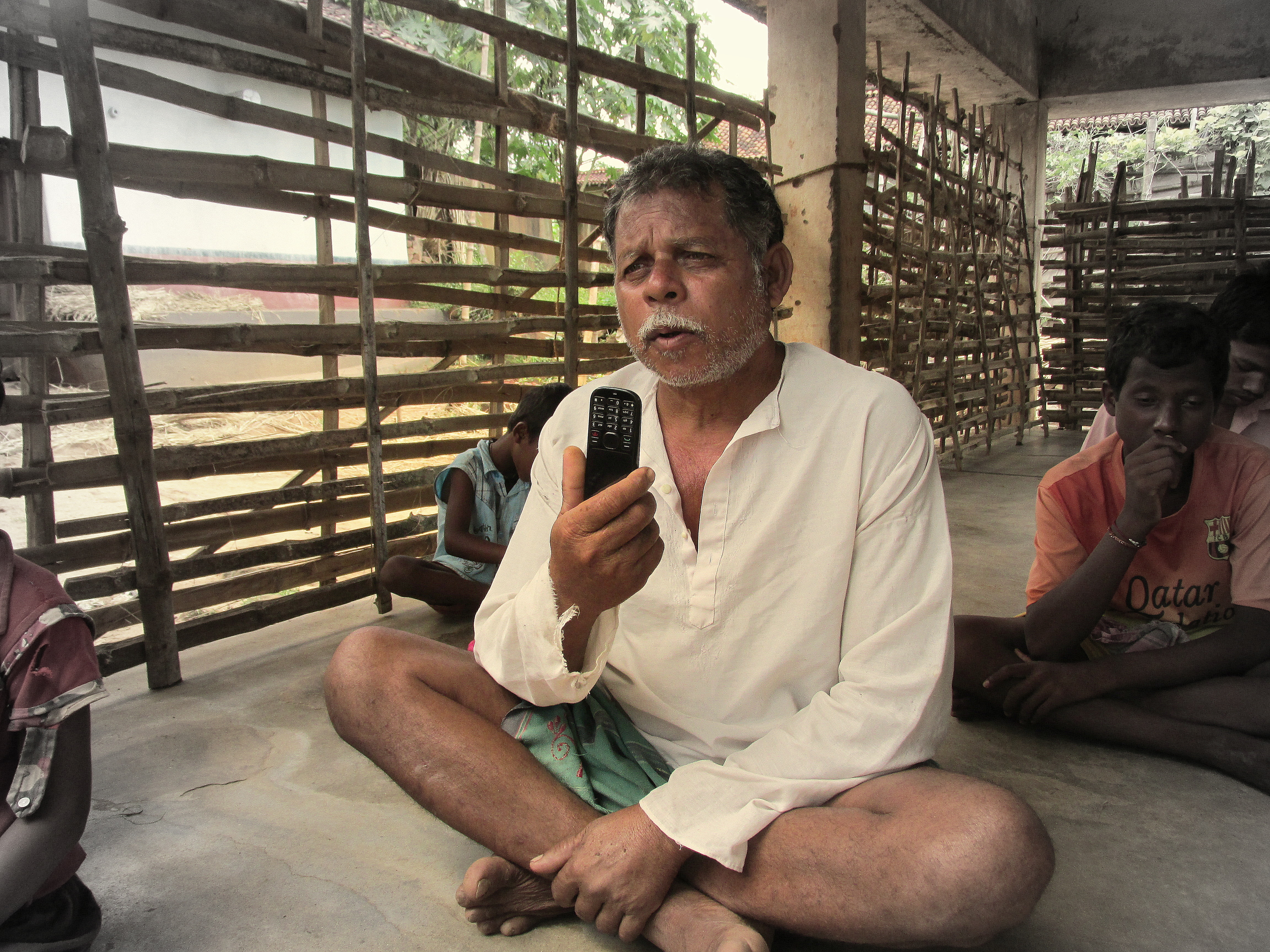
  • Only 57% of ration card holders received the committed double rations, i.e. extra 5 kg of grain (wheat or rice) during the lockdown. Only 49% received 1 kg of daal during the period.
  • The quality of food grains provided during the months of April and May was good or fair accordingly to 57% of the people, while 30% found the quality to be poor.
  • Of those who have young children, 77% did not receive any food items or cash from the Aanganwadi centers during the lockdown.
  • 69% of school going children did not receive any food items or cash as committed for the mid day meal scheme. Curfew-like restrictions during the lockdown, the unavailability of teachers for distributing food items to home, and problems with procurement of food grains, were some of the main reasons behind the non-implementation of this scheme.
  • Financial support of Rs 1000 committed to ration card holders under the PM Garib Kalyan Yojana did not reach 48% of the people.  Lack of cooperation from officials, and problems with fixing Aadhar and bank linkage errors were the main factors that led to gaps in the implementation. 
  • 48% ration card holders did not have names of all the family members included in their respective ration cards. Lack of cooperation of officials was cited as the foremost reason, along with lack of information, in getting a new ration card issued or for adding a family member’s name in existing ration cards.
Categories
GROUND REPORTS

Aug ’20 What challenges do people face in accessing welfare benefits?


 We have a fantastic collaboration in progress with the social protection team at Dvara Research, to build case-studies based on a detailed analysis of the challenges faced by people in accessing welfare benefits. A dedicated web-page at Dvara explains the exclusion framework against which we are positioning these case-studies, all of which were identified through voice-reports on Mobile Vaani. These detailed case-studies help tell a story of the struggle that citizens face in dealing with the state to access benefits which they should rightfully get. Many of these issues also arise due to the use of opaque technology systems that do not have well defined processes to deal with failures. 
Categories
GROUND REPORTS

Sep ’20: Community surveys on the state of child nutrition security


We conducted a third round of community surveys on the Mobile Vaani network in Bihar, Jharkhand, Madhya Pradesh, and Uttar Pradesh, this time with a greater focus on child nutrition security through the mid-day meal and Anganwadi services. A summary of results from Bihar is below. Other states did not fare much better. The poor state of services delivery stands the risk of reversing the gains made in nutrition over the last several years. Links to our earlier rounds of community surveys are here: Round #1 – April 2020, Round #2 – June 2020.

  • 68% respondents have not received dry rations or any monetary assistance in lieu of mid day meals in schools.
  • Of those who received some benefits, 80% have received a monthly ration kit comprising of only wheat and rice, while only 9% received dry ration along with cost for cooking, and another 11% received cash transfers in lieu of mid day meals. 
  • Of those who received some benefits, 64% respondents were satisfied by the quantity and quality of rations and the amount of money received in lieu of mid day meals. 31% however were not satisfied and they found the quantity of ration or the amount provided to be less. 
  • Of those who did not receive any assistance, 76% parents say that they are finding it hard to provide good quality food to their children and are managing somehow, while 17% are unable to provide good quality food. 
  • 77% of the respondents who have children enrolled in Aanganwadi centers have not received any provisions from the centers. 
  • Of those who have received assistance, 80% found distributed ration to be of good quality while 15% said that the quantity was not enough.
  • Of those who did not receive any assistance from Aanganwadi centers, 85% respondents say that they are managing somehow with whatever food that is available at home. 10% are unable to provide good quality food to their children. 
  • As far as agriculture land, kitchen garden or availability of livestock is concerned, 79% respondents do not have any of these which can help them in managing nutritious food for the household. 
  • At times, family members including children even had to skip meals or cut down on the food amounts because of affordability reasons. 47% respondents said that they faced this situation. 
Categories
GROUND REPORTS

Sept ’20: How did NREGA help workers during the lockdown?


During these times of high unemployment and a weak economy, NREGA is critical for two reasons: as the sole income source for many vulnerable rural households, and if improved and made more efficient then as a way to move labour markets in favour of migrant workers. We provide a ground-up view of the challenges in NREGA operations based on our recent experiences and describe how the tumultuous lives of migrant workers can be made less precarious through well-functioning and better-funded social protection mechanisms. 

The detailed results from our work in NREGA are here. Some top-level highlights below. An article based on this research, NREGA as social protection and beyond: A shot at dignity for workers, can be read here.

  • Not everybody who applies for a job-card is able to get one. Only about 60-65% of job-card applicants we worked with, received their job-cards.
  • About 90% of them received their job-cards within 3 weeks.
  • However, only 50% of those who applied for work were able to get it. Another 30% got work but only for 10 days. 
  • Those who did work, 56% received their payments within 10 days, and another 22% within 3 weeks. The remaining 22% had not received their wages even after a month.
  • There is in general a lack of awareness among workers on the formal means to demand work. The government has established positions of Rozgar Sewaks for this purpose, to hand-hold people to get job-cards and register for work, but many Sewaks remain absent. A fortnightly organization of the Rozgar Diwas is also not done regularly. 
  • Group based registration, work demand, and grievance redressal drives, like through the Rozgar Diwas and assisted by Rozgar Sewaks, can be instrumental in helping more people access MGNREGA. Such initiatives should be rigorously imposed, and extended to other welfare schemes as well. 
  • Several other issues hamper MGNREGA as well. The availability of funds at the local funds, corruption through the use of machines and ghost-workers concealed by middlemen, and DBT issues with Aadhaar linkage, dampen the impact that MGNREGA can have, especially during current times when unemployment is high and migrant workers need to find work closer to home.