


Download our white paper on Strengthening Health Care Policies through Technology. Excerpts are below.
 The International Diabetes Federation (IDF) has estimates that there are nearly 371 million people in the World suffering from diabetes. India accounts for 61.3 million diabetic patients of the world. As per IDF, this figure is expected to reach a staggering 100 million mark by 2030, unless significant efforts are made to curb this disease. Even more concerning is that the steep rise in the incidence of diabetes heightens the risk of heart and chronic related diseases massively. The economic expenditure on diabetes is also mounting every year.
Half of the people with diabetes in India are undiagnosed and a majority them live in rural areas. More than 9,83,000 deaths in India are attributable to diabetes. Due to inadequate awareness and medical care in the rural spaces, diabetes control remains a major challenge. In addition, poor implementation and monitoring makes the existing programs ineffective.
The rampant increase of in diabetes in India calls for better policies and health care delivery system to combat the rising burden. Diabetes patients can live normal healthy life if proper care is taken. Creating awareness on the part of people and administration is very essential to manage and prevent diabetes. People should be made aware and educated about their health and fitness level to reduce the number of patients in India.
Insights from National NCD Summit
At the National NCD summit, policies and challenges to managing diabetes were brought to notice. Various aspects related to NCDs and their cure were deliberated, with a focus on diabetes . Several sessions were conducted to address topics like Causes responsible for diabetes, Current global and national practices, prevention and management of diabetes, training and development of human capital and role of technology in tackling NCDs.
The Summit identified the emergence of Information Technology as means to facilitate effective management of the NCD programs. It emphasized the role of a robust management information system for the success of the tackling NCDs in India.
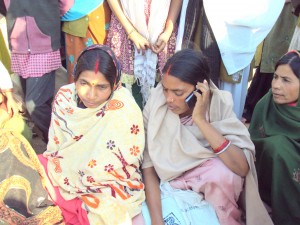
Additional Secretary, Ministry of Human Resource Development discussed how the whooping presence of mobile phones in the poorest of areas with no media or internet connectivity can be leveraged to impart proper health facilities to the masses.
Senior Vice president of Project Hope gave a presentation on how through technology they are running a successful training and development program for the health care functionaries all over the world.
Associate professor of College of pharmacy, PURDUE University mentioned the vast gap between the health care facilities and its reach to patients and observed technology as the “Glue‟ to stick together the medical facilities and the beneficiaries.
NCD Programs in India– Challenges
The Joint secretary NRHM and State nodal officers from West Bengal, Kerala, Chhattisgarh and Haryana moderated a panel discussion on the implementation of NCD programs in the pilot districts. They enumerated the barriers to the screening and treatment of NCDs and shed light on the innovative approaches to tackle them.
As per their experience of working on the ground to implement the pilot programs to manage NCDs, a host of gaps in the implementation of processes were found. The major challenges in carrying out the NCD programs were:
- Lack of adequate centers and means for procuring and dispersing the medical drugs and equipments on time
- Lack of means to monitor the supply of the drugs and equipments
- Lack of qualified medical professionals for health care centers
- Limited Reach- How to dis-pense the diagnosis and treatment to the rural population
- Lack of accountability and monitoring of the medical staff- How to ensure that proper care and facilities are reaching the masses
- Lack of awareness- How to create awareness amongst the population where the majority is illiterate
- Lack of uniform education material & training- How to ensure that the all the medical functionaries are given proper, correct and uniform training
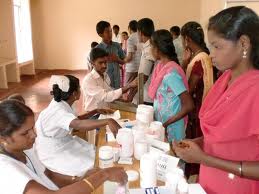
The question then is; how do we raise awareness and ensure proper supply of medical care and medicines in rural areas where illiteracy rates are high and medical infrastructure is abysmal.
The answer to these problems is automation of the processes through a medium that addresses the obstruction of wide-spread illiteracy, limited access to media and no access to internet in the regions. The panel of officers reflected on the use of mobile phones as an effective resolution to these challenges. 80% of the population in India lives in rural areas with low income levels, wide-spread illiteracy, no internet and no media penetration.
Information Technology– Aid to Health Care
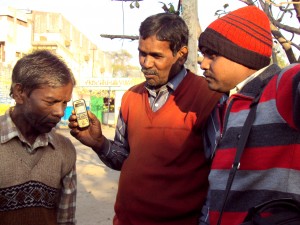
To overcome these limitations, the Joint Secretary referred to the growing use of mobile phones as the definitive medium to bring about a revolution in the way health care industry functions.India is the second-largest mobile phone user with over 900 million users in the world. The immense potential of the mobile phones can be leveraged to reach out to people, especially those living in remote areas. It can be used to integrate and enhance the existing Health related- IT enabled Systems. The medium of mobile based Information Technology can be utilized to deliver a full circle of health care services like:
- Supply chain monitoring
- Validating delivery of services
- Ensuring quality service delivery
- Registering Patient feedbacks
- Raising health awareness among people
- Training medical functionaries and professionals
- Counseling the patients
Gram Vaani Mobile and IVR Services to automate Health Care processes
The vast of ambit of mobile based solutions offers to bridge the gaps in health care operations in myriad ways. Interactive Voice Response Systems (IVRS) on mobile phones provides a host of services to reach a millions while breaking the barrier of illiteracy and digital divide.
Services on mobile like Mobile- health, Mobile- survey, Mobile- learning, Mobile- tracking etc. to automate processes ensures quick and high quality out-comes. It can be utilized for the purpose of:
- Providing mobile learning and training to health functionaries
- Tracking and monitoring the supply of medical drugs and equipment
- Monitoring medical staff
- Raising health awareness amongst people
- Obtaining customer feed-backs
- Conducting health surveys
Gram Vaani works in the space of mobile technology and IVRS to provide “Last mile connectivity” with the Bottom of the Pyramid (BOP).
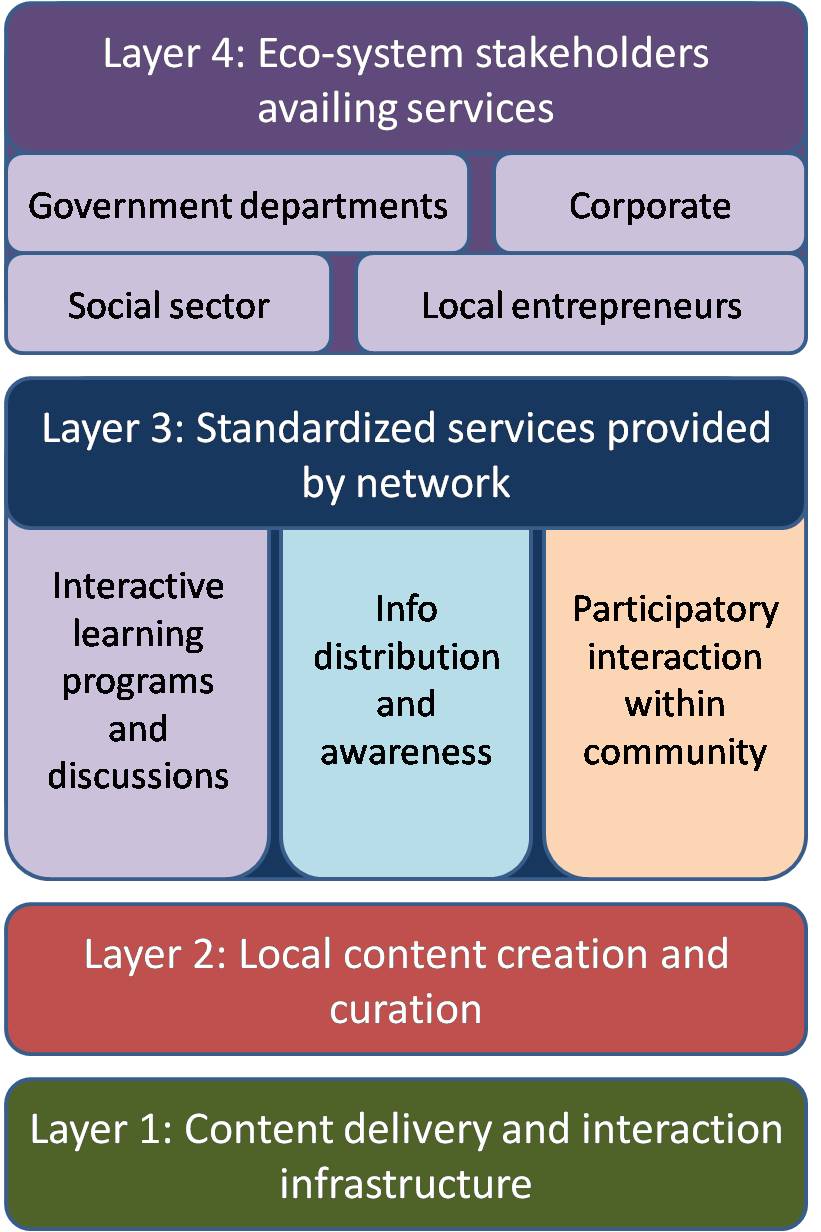
We provide Information technology solutions for health care, social and corporate sectors.Our mobile based technology platform serves to connect the organizations and Government with the low income population who has no access to any forms of communication.We automate the business processes through our automated suite of products- vAutomate. vAutomate renders various services like vHealth, vSurvey, vLearn, vAnswer, vAct, vInform, vTrain, vHelp, and many more, to reach the unreached under served markets.
Know more about us, follow us on